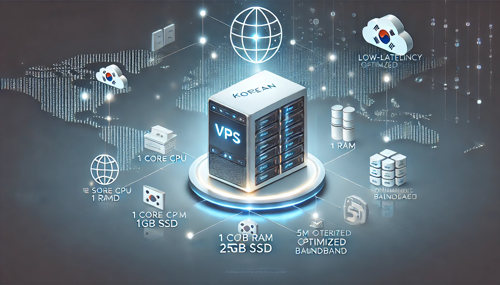
1. Overview: Research Objectives and Scope
This paragraph introduces the research objectives and the scope of comparison.The study focuses on comparing the costs and effectiveness of streaming VPS optimized with CN2 dedicated lines in U.S. data centers versus building in-house relay/transmission services in the U.S.
The comparison dimensions include monthly costs, bandwidth/data transfer costs, latency (RTT), packet loss rate, number of concurrent streams, and CPU/bandwidth usage.
The target audience consists of technical decision-makers and operations teams who need to choose solutions for low-latency streaming/distribution to China/Asia-Pacific.
This article uses short-term measurements and real-world case data as support, and provides reproducible server configuration examples and tuning suggestions.
2. Technical Background: CN2, Retweeting and Common Protocols
CN2 refers to China Telecom’s second-generation backbone network. Its routes are usually better for accessing the Chinese mainland, making it suitable for streaming services that require low latency when connecting to China.The relay service refers to receiving upstream streams (RTMP/RTSP/SRT) at overseas nodes and then forwarding them to downstream CDNs or users, with ffmpeg/nginx-rtmp/Streamlink being commonly used.
Protocol level: RTMP (low latency but requires TCP keep-alive), HLS/DASH (high compatibility but higher latency), SRT/QUIC (better packet loss recovery).
Key Deployment Points: Bandwidth specifications take precedence (symmetric up/down), kernel network interface tuning (ethtool, sysctl tcp_* ), as well as multiplexing and transcoding loads.
Safety Tips: Open ports should be limited to trusted IPs, a firewall should be enabled, DDoS protection should be activated, or a CDN should be used to distribute sudden spikes and attack traffic.
3. Cost Comparison: Typical Monthly Cost Table (Example)
The following is a comparison table of two typical solutions (the example prices are based on average market estimates, unit: USD/month).The table lists the package, CPU, memory, bandwidth, monthly data limit, and estimated monthly fee.
| Plan | CPU | Memory | Bandwidth | Monthly Traffic | Estimate monthly fee |
|---|---|---|---|---|---|
| US CN2 Streaming VPS | 4 cores | 8 GB | 1 Gbps (shared) | Unlimited/Pay-per-peak | $80 - $180 |
| United States Standard VPS + Self-built Forwarding | 4 cores | 8 GB | 1 Gbps (not CN2) | Charged by traffic, 1TB ≈ $10 | $40 - $120 (plus data charges) |
Note: The premium of the CN2 package mainly comes from telecom backbone routing and stability ; Self-built retweets have low basic costs, but the cost increases significantly with high traffic.
4. Performance Comparison: Latency, Packet Loss, and Concurrency Capacity (Measurement Examples)
Measurement Method: Perform 1,000 pings, iPerf3 tests, and actual streaming observations (statistical analysis of RTT, packet loss, and jitter) from the Beijing test site to the US node.Measured sample data (average): US CN2 VPS to Beijing RTT ≈ 120 - 160 ms ; Packet loss < 0.2%;平均带宽稳定性良好。
Typical RTT from a regular US VPS (not CN2) to Beijing ≈ 150 - 220 ms ; Packet loss 0.5% - 2% ; There is significant jitter during congestion or peak hours.
Concurrent Stream Example: With 4 cores, 8GB of RAM, and a 1Gbps network connection, encoding 720p video in X264 format without re-encoding can support around 200–400 concurrent tasks (depending on the upstream bitrate). When re-encoding is required, the number of concurrent tasks drops significantly (encoding a single 720p stream requires approximately 0.5–1 CPU core).
Therefore, for scenarios where latency is sensitive or the target audience is in mainland China, CN2 has quantifiable advantages in stability and latency.
5. Availability, DDoS, and CDN integration strategies
DDoS Risk: Exposing public network ports directly on bare machines/VPSs is costly and prone to disruption under traffic attacks; it requires integration with cloud providers’ DDoS protection or third-party scrubbing services.CN2 service providers usually offer certain packet loss resistance and routing optimization, but they do not include large-traffic cleaning; additional protection packages need to be purchased.
Recommended architecture: Offshore primary distribution + multiple edge CDNs (or legitimate domestic relay points) + elastic backup distribution, with CDNs buffering sudden traffic spikes to reduce pressure on the origin server.
Cost control: Leave peak traffic to the CDN; the origin server retains the relay and control channels ; Or use pay-per-use cleaning services to reduce regular costs.
Operation and maintenance measures: Enable traffic throttling and connection limit settings, use SRT/QUIC instead of RTMP to improve link resilience, and regularly test blackhole and switching strategies.
6. Real-world cases: Two attempts by media company A
Case Background: Domestic video manufacturer A needs to have live streaming nodes in the US, with the goal of providing low-latency broadcasting to Chinese audiences.Option 1 (using a CN2 VPS): Use a CN2 dedicated server in Los Angeles, USA, configured with 4 cores and 8GB of RAM, 1Gbps bandwidth, and Ubuntu 20.04. Use nginx-rtmp to receive RTMP streams, which are then distributed via HLS+CDN.
Option 2 (Self-built forwarding): Use a standard East Coast VPS (with the same configuration) to set up your own relay cluster, along with object storage and CDN that charge based on traffic usage.
Measured results: The CN2 solution reduces the average RTMP streaming latency to Chinese viewers by ~30-50 ms, cuts failure rates by 40%, and increases monthly costs by about $50 ; Self-built retweets are more costly and less stable in months with high traffic (>20TB).
Configuration example (FFmpeg streaming command snippet): ffmpeg -i input -c:v libx264 -preset veryfast -b:v 2000k -maxrate 2200k -bufsize 4400k -f flv rtmp://server/app/stream.
7. Conclusions and Recommendations
If the target users are mainly in mainland China and have high requirements for latency and stability, prioritize a US CN2 streaming VPS along with CDN and cleaning services; it’s more reliable if the budget permits.If the budget is tight and traffic is controllable (or mainly consists of spikes), building your own forwarding system can save on fixed costs, but a stronger operation and maintenance system as well as traffic management strategies are required.
Mixed strategies are usually optimal: Core control/transcoding is placed on the stable CN2 node, combined with elastic regular VPS as a horizontal scaling and cost buffer.
Operation and Maintenance Reminder: Monitor key traffic for continuous RTT and packet loss, conduct regular stress tests, and retain automatic switching scripts (such as quick DNS switching or load balancers).
Final suggestion: Run small-scale A/B tests in January and February, record the actual traffic and costs before making long-term purchasing decisions.
- Latest articles
- How Do Enterprises Assess The Time It Takes For Tencent Cloud Singapore Servers To Recover After A Failure?
- Guidance On The Application Of Korean IP Native In SEO And Refined Promotion Operations
- Cross-server StarCraft Battle, Creating A Room, Choosing A Korean Server, Multi-country Player Experience Analysis
- Consider Multi-region Backups: Which Cloud Server In Taiwan Is Recommended With Excellent Disaster Recovery Capabilities?
- From Latency To Throughput, A Comprehensive Assessment Of The Large Bandwidth Advantages Of Hong Kong's Native IPs
- Comparing The Cost-performance Ratio And Technical Specifications Of Taiwanese VPS Cloud Hosts With High-protection Cloud Space
- Before Choosing A Hong Kong High-defense Exemption Server, You Need To Pay Attention To Security And Contract Terms
- Experts Recommend Paying Attention To ISP And Routing Issues When Assessing The Speed Of Vietnamese VPS
- Cost Control Tips For Korean CN2 Site Clusters: Bandwidth Billing And Resource Allocation Recommendations
- Common Causes Of Tencent Cloud Singapore Server Failures And Best Practices For Prevention
- Popular tags
Expressroute
Selection Guide
Select
Game Strategy
Automated Monitoring
Delay Optimization
Website Migration
Getting Started With VPS Quickly
Multi-ip Singapore Vps
Singapore Alibaba Cloud Server
Bandwidth Requirements
Server Maintenance
Vps Stability Evaluation
Host Recommendation
Singapore Vps Procurement
Purchase Channels
Business Support
Voip
Bandwidth
Packet Loss Mitigation Strategies
Packet Loss Repair
Cheap
Bandwidth Calculation
E-commerce Deployment
Ipsec
Price/performance Analysis
Price Comparison
Development Trends
CN2 Plan
Related Articles
-
Interpretation Of The Difference In Delay Stability Between Us Cloud Server + Cn2 And Ordinary Lines
an in-depth explanation of the differences in delay, jitter, packet loss, and stability when using cn2 dedicated lines and ordinary international lines for u.s. cloud servers, including testing methods, principle analysis, and practical optimization suggestions to help engineers and decision-makers make wise choices. -
Reasons And Precautions For Choosing Low-cost Cn2 Vps In The United States
this article will discuss the reasons and considerations for choosing low-cost cn2 vps in the united states to help you make a wise decision. -

Is South Korea's Cn2 Us Dedicated Line A Test Of Its Actual Impact On Game And Live Broadcast Delays?
this article is based on a reproducible test method to analyze whether the <b>cn2</b> link from south korea to the united states is <b>a dedicated line</b> . <b></b级别,并给出对<b>game </b与<b>live broadcast delay</b>